The method · the books
TOCA Method
Tarraxo · Kizomba · Urbankiz
- TTouchContact comes before the step.
- OObservationListen to your partner and to the music.
- CControlThe right body, never forced.
- AAwarenessOf yourself, your partner, the floor.
The teacher’s guide
Paperback & ebook · Available in English, French and Spanish.The four pillars
Four letters, one way to dance.
Before looking at steps, the TOCA Method checks four things in every dancer. Together they make the dance clear, safe and musical.
Touch
Contact comes before the step. The embrace is where the lead and the follow talk to each other.
Observation
Listen to your partner and to the music before you move. Feel first, then answer.
Control
The right body, never forced: posture, weight and micro movement, at the speed of the music.
Awareness
Of yourself, your partner and the floor: space, energy, respect and comfort.
Who it is for
Inside the books
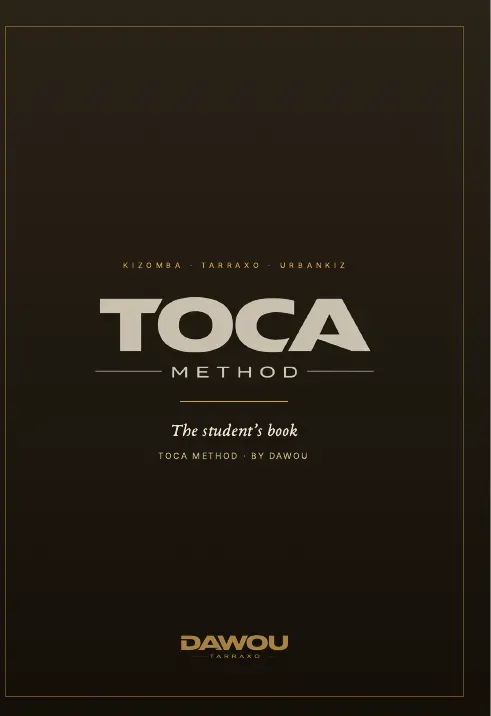
FOR DANCERS · EN / FR / ES
The student's book
- Understanding the dance: history, music, the body and connection
- 9 progressive courses, from Foundations to Lead & Follow
- Musicality: tempo, accents, silence and the Tarraxo feeling
- Concrete drills to practise alone, with a partner or at home
- Glossary, playlists, training plans and self-assessment
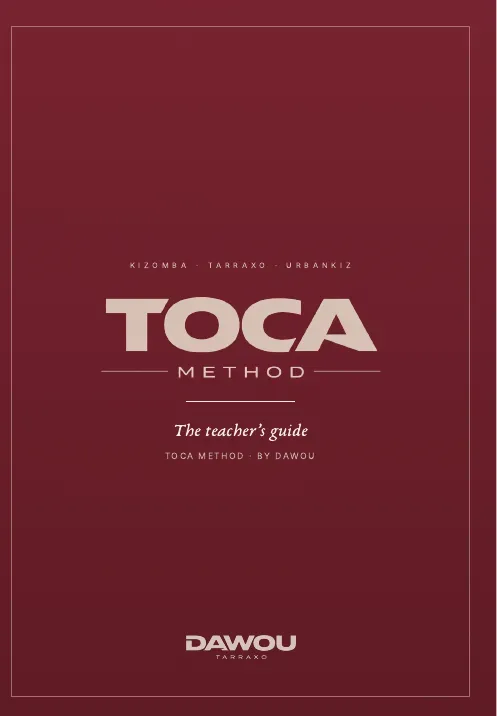
FOR TEACHERS · EN / FR / ES
The teacher's guide
- Teaching well: reading a student, cueing, correcting without crushing
- Progressions by level, for leaders and followers
- Teaching formats: private, couple, wedding, group and online
- The art of choreography, and building a school and a team
- Printable tools: lesson plans, progress cards and checklists
Inside the books
Read a page.
Real pages from the student’s book and the teacher’s guide. Tap a page to open it full size.
The student’s book · page 10
The four pillars of TOCA
TOCA is not a collection of steps.
The student’s book · page 93
Dance the silence
The music does not disappear when the sound stops.
The student’s book · page 86
Why your connection feels heavy
Why does your connection feel heavy?
The teacher’s guide · page 17
A great dancer is not automatically a great teacher
A great dancer is not automatically a great teacher.
The teacher’s guide · page 50
When the student does not understand
If the student does not understand, repeating louder is not a method.
Listen before you act.Feel before you move.Connect before you dance.
What the books cover
From the first step to teaching.
Technique, feeling, connection, musicality, practice and teaching: the whole method, step by step, with free lessons every week here.
- Kizomba technique
- Tarraxo and feeling
- UrbanKiz technique
- Connection
- Musicality
- Practice
- Teaching
TOCA Method
About Dawou Tarraxo
Pioneer of Tarraxo, Dawou has taught in more than fifty countries across Europe, Asia, Africa and the Middle East, from the Tarraxo Schools of Paris and London to Dubai today. For fourteen years he was also an IT teacher in Paris, an experience that shaped a way of teaching built on listening, patience and making knowledge accessible to everyone.
It is from this human, pedagogical and artistic experience that the TOCA Method was born, founded on touch, observation, control and awareness. He is also a music producer, composing his own Tarraxo blended with afrobeat; you can find his music under the name Dawou Tarraxo on all platforms.
Listen before you act. Feel before you move. Connect before you dance.
TOCA Lessons
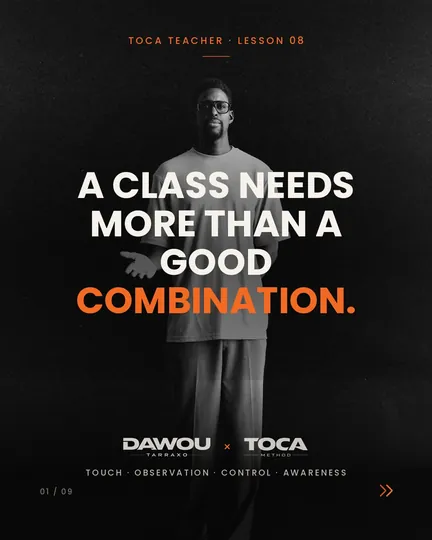
This week’s lessons.
Free lessons from the TOCA Method, one for dancers and one for teachers. New every Tuesday and Friday.
All the lessons · 14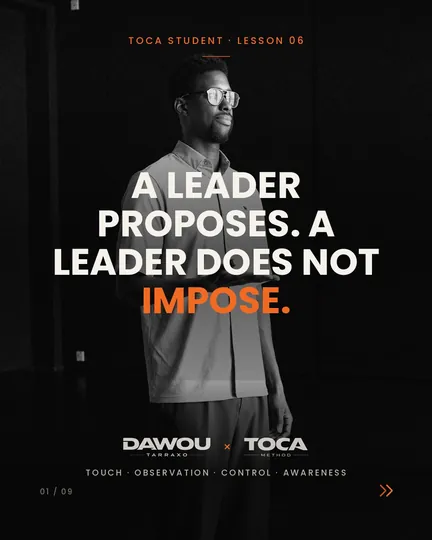
Online AcademyComing soon
Learn Tarraxo online with Dawou.
Video classes by box: foundations, connection, musicality, built on the TOCA Method. Lifetime access, at your own pace. Join the waiting list and be the first to know when it opens.
- Foundations
- Connection
- Musicality
- TOCA Method
FAQ
Frequently asked questions
Who are the two books for?
The Student’s Book is for dancers at any level who want to progress with method, from the very first foundations to real feeling. The Teacher’s Guide is for instructors who want to structure, correct and pass on the method, from group classes to private and wedding lessons.
Do the books replace a teacher or classes?
No, and they don’t try to. As Dawou writes, the book does not replace a teacher or the hours spent on the floor, but it goes with you everywhere. It explains the why behind each movement, tells you what you should feel, and gives drills to practise alone, with a partner, or at home between classes.
Do I need to know a lot of figures?
No. In Kizomba and especially in Tarraxo, quality matters far more than quantity. Three clean moves, well phrased and well connected, are worth more than twenty messy figures. The method builds fluidity and listening before a collection of moves.
Are Kizomba and Tarraxo the same thing?
They are cousins but distinct. Kizomba is a travelling dance, fluid, that moves across the floor. Tarraxo (or Tarraxinha) is more static, centred on the hips, isolations and placement, often to slower, more electronic music. The method teaches you to tell them apart and to move from one to the other with the music.
Do I need a partner, and can I learn both roles?
You do not need a fixed partner. Dancing with many people teaches you to adapt and improves you faster. And yes, you can learn both to lead and to follow: understanding both halves of the connection is one of the quickest ways to improve the side you dance.
What formats and languages are available?
Both books are available in English, French and Spanish, on Amazon (Kindle and paperback) and on Apple Books. Google Play is coming soon.
Tarraxo
The TOCA Method: a way to learn and teach Tarraxo
Dawou Tarraxo created the TOCA Method to teach Tarraxo, Kizomba and Urbankiz in a clear and progressive way. TOCA stands for Touch, Observation, Control and Awareness: the four things he checks in every dancer before looking at steps.
The method exists as two books, the student’s book and the teacher’s guide, in English, French and Spanish, and it will be the backbone of the Online Academy that opens before the end of 2026.